

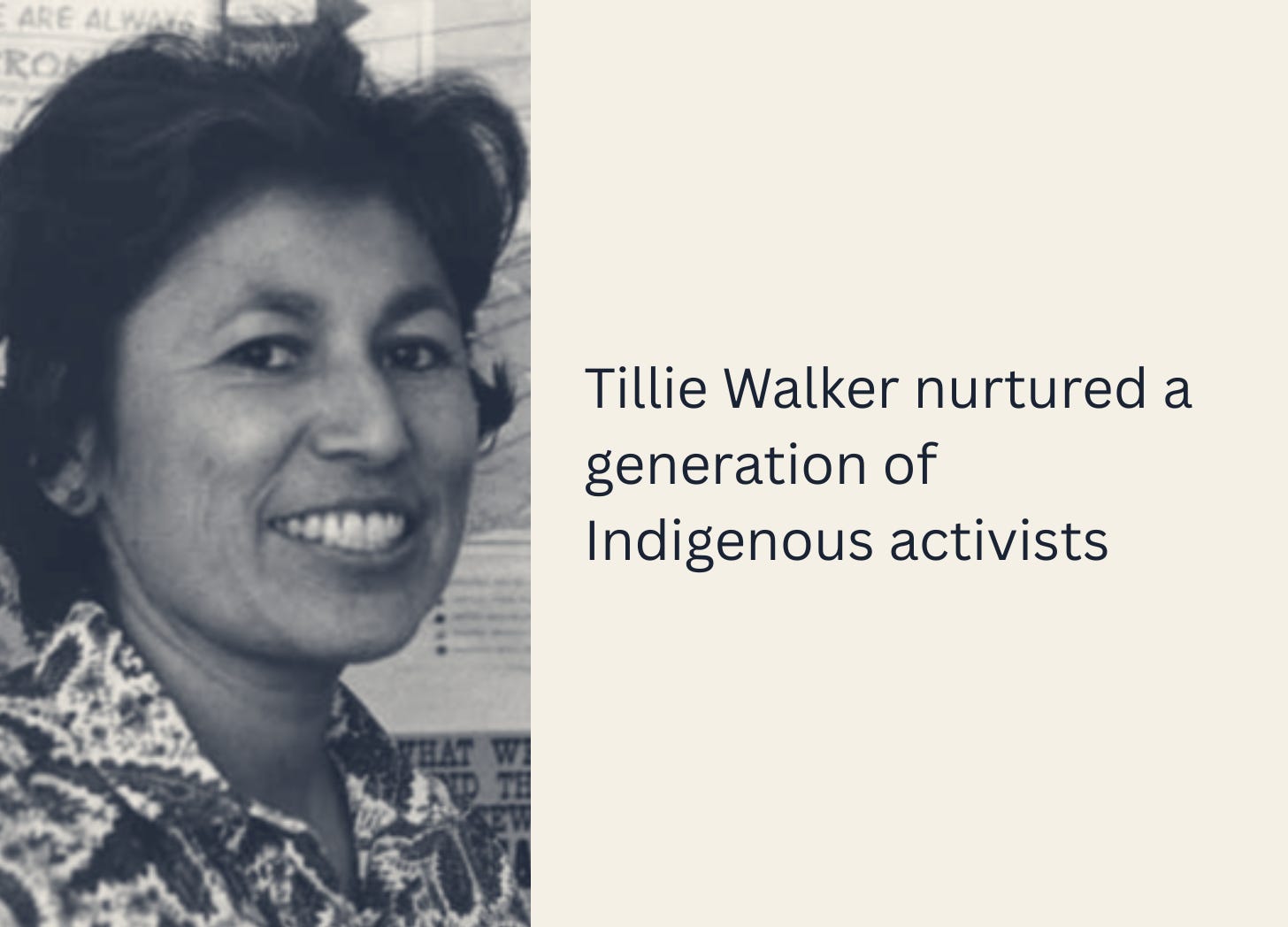
It’s pouring again, as it had been for days. But even in this gray light, the white marble steps to the Supreme Court building seem to glow.
“We want justice! We want justice!” Tillie Walker pauses, lets the crowd carry on, and raises her eyes toward Lady Justice, high atop the building pediment, flanked by marble men in armor and robes. Symbols of Order, Authority, and Justice. European. Not a headdress, ceremonial pipe, or talking stick among them.
She drops her gaze to the mud-caked cuffs of her jeans and the streaks of brown water puddling around her boots. It was a muddy mess back at Resurrection City, the Poor People’s Campaign shantytown clustered around the Lincoln Memorial. Martin Luther King Jr. had asked her to rally Indigenous people to this cause, and she readily agreed. “The poor know no color,” she said.
The Civil Rights Act and the Voting Rights Act had been passed, but King felt it was not enough that Blacks could now sit at lunch counters and freely cast their votes. It was time for an Economic Bill of Rights that guaranteed no one in the richest nation on earth lived in poverty—Black, brown, red, or white. But he would not live to see this unprecedented alliance of races. He was felled by an assassin just weeks before caravans started rolling into D.C. For days now, it seemed the skies themselves wept for his loss.
They were building boardwalks at Resurrection City, shoveling muck to keep the plywood shanties dry. “Mayor” Jesse Jackson presided at a “City Hall.” Quakers staffed a dining hall and medical clinic. Capitol police stationed a lookout atop the Washington Monument to keep an eye on the demonstrators and their marches to the Department of Agriculture to demand fair distribution of food; to the Department of Health, Education, and Welfare to demand equal education and healthcare; and to the Department of Labor to demand living wages.
Today is “Indian Day,” and Tillie Walker mounts the steps along with 300 Indigenous and Latino/Latina protesters demanding justice from the highest court in the land.
Born in 1928, Walker grew up in a log house built by her father, who farmed the fertile bottomlands along the Missouri River in North Dakota. Stone circles dotted the land where their ancestors had built earthen lodges over the centuries, relocating to follow game or the dictates of the wild Missouri. When European settlers with odd notions about drawing lines in the Earth came, the Mandan, Hidatsa, and Arikara tribes signed the Fort Laramie Treaty in 1851, and were given reign over 12.5 million acres between the Missouri and Yellowstone rivers. Railroads, miners, and farmers kept pressing at their borders, so by the time Walker was born, the Fort Berthold Reservation had dwindled to 640,000 acres.
The settlers erected their fences and built their homes downstream of the reservation. Property lines meant nothing to the Missouri, though, and it occasionally flooded the settlers’ land. So they called in the Army Corps of Engineers to tame it. The Corps’ job, written in its charter, was to ensure “the fullest necessary use of resources by the present generation”—antithetical to the Indigenous culture of stewarding the land for seven generations.
By the time Tillie Walker was off at college—her parents were early believers in education for their girls and boys—the Army Corps had mounded one of the largest earthen dams in the world, and the swelling waters of the Missouri threatened their family home, farm fields, and the bountiful kitchen garden that had first been planted by her great-grandmother.
With the Corps’ engineering project a fait accompli, the Affiliated Tribes were forced to sell their fertile bottomlands, the timber, the wild fruits, their shrines, and their hospital for $50 an acre, treaty rights be damned. Their Council Chairman, George Gillette, wept at the signing.
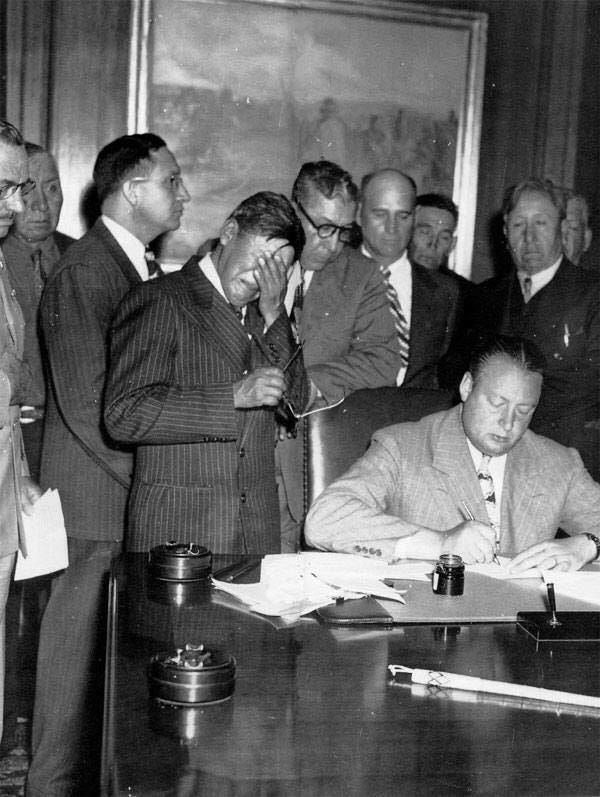
Ninety percent of the families on the reservation were moved to the arid prairie in the 1950s. Families were called up in alphabetical order to select their parcels. Clans and neighbors were scattered, and resentments were seeded. They weren’t allowed access to the shoreline of the new lake, which the Corps leased to boating and recreation concerns. At the behest of a group of church ladies, the lake was named Sakakawea, to honor the Hidatsa woman who had been enslaved by a French trapper and became a guide on the Lewis and Clark Expedition.
“It just destroyed us,” Walker said. “It’s going to take a long time to recover. Our tribes were located along the Missouri River for thousands of years. We had permanent villages there and a very structured society.”
Tillie Walker mounts the Supreme Court steps with Mattie Grinnell, 101 years old and the last full-blooded Mandan, and Rosie Crow Flies High, a member of the Three Affiliated Tribes Council. Many traditional leaders had refused to join the Poor People’s Campaign. “Indians don’t do things like that,” some leaders had said. Vine Deloria Jr., an influential advocate for Indigenous sovereignty, rejected MLK’s grouping of all minority communities based on their economic status. The Indigenous nations wanted autonomy. “Blacks seem to be saying that white society was bad, but they wanted it anyway.”
Walker and the protesters with her today disagree. She sees atop the courthouse steps one of her mentees, Hank Adams, a young Assiniboine from Washington state. He carries a petition to the court, decrying its recent decision to allow his state to dictate when, where, and how fish can be harvested. There was room in this movement for Indigenous sovereignty and economic reform.
Days earlier, as one of the Poor People’s Campaign’s “Committee of 100,” she stood before Interior Secretary Stewart Udall and declared that Indians were not a “problem” to be solved by whites.
“We are sick and tired of the ‘Lo, the poor Indian’ attitude,” she said. A proud people should not be required to give up their culture to thrive on their own continent. The history of forced assimilation efforts needed to be countered with education, she said. She ran a college scholarship program, collaborated with the National Indian Youth Council on its Red Power publication, America Before Columbus, and helped organize seminars on activism.
Tillie Walker reaches the top of the Supreme Court steps and strides to the massive bronze doors that court staff had closed to the rabble. Eight bas-relief panels tell the story of Greek, Roman, British, and American law. On the street below, a gaggle of lawyers, shut out from their daily routine, watches in bemusement.
And Rosie Crow Flies High steps forward and pounds on the bronze face of a long-dead Roman solicitor.
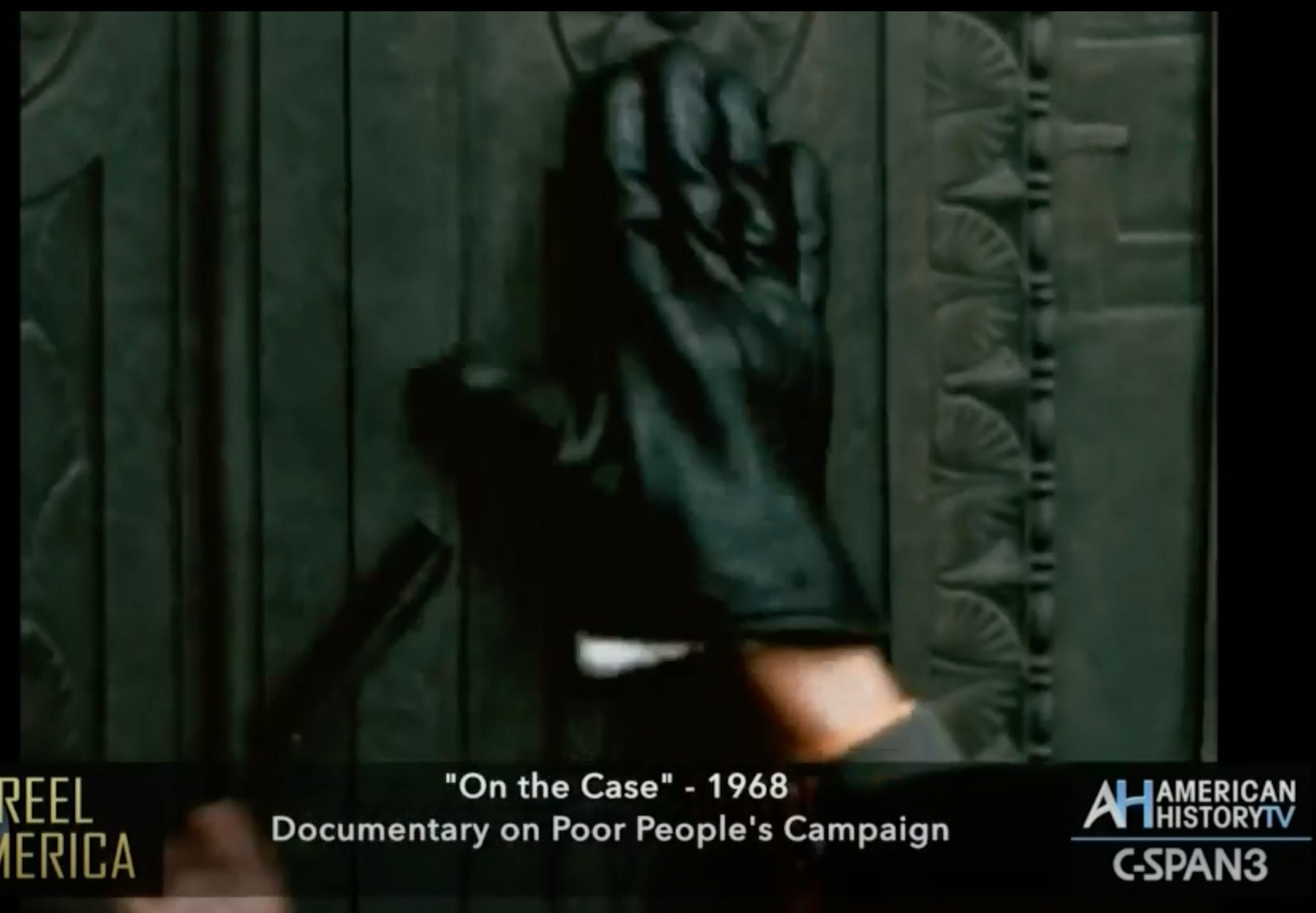
“Let Us In! Let Us In!” She shouts. And the crowd joins in.
Hank Adams and a small delegation are eventually allowed in to present the petition to the court’s clerk. The next day’s New York Times article on the “noisy demonstration” will lead with the arrest of three young protesters who broke some windows.
A week or so later, Robert Kennedy’s coffin rolled through Resurrection City, on its way to Arlington. A somber Washington establishment tolerated several more weeks of demonstrations. Vague promises were made, then the last inhabitants of Resurrection City were arrested, the shanties torn down, and the park re-sodded. It was an election year, and a country divided by the Vietnam War didn’t have the spirit for an “Economic Bill of Rights.” The whole affair was judged by the New York Times editorial board a “chaotic striving for unattainable, even undefined, goals.”
And so the country took a wrong turn. A million jobs, six million houses, collective bargaining for farmworkers, fair distribution of food—these demands weren’t “defined” enough; they were “unattainable.” In reality, they were a threat to the status quo.
But a nation isn’t conquered until the hearts of its women are on the ground, a Cheyenne proverb says. Tillie Walker returned to the West with fight still left in her. And though you will find very little of her exploits in newspaper clippings, her niece, historian Angela K. Parker, interviewed plenty of contemporaries who gave credit where it is due:
She participated in the occupation of a Bureau of Indian Affairs office in Littleton, Colorado, and steered a lawsuit that ultimately ended the agency’s discrimination against its Indigenous employees.
She sued the state of Colorado when it refused to live up to its promise to provide free tuition to Indigenous students at Fort Lewis College. She won.
She returned to the Fort Berthold Reservation and helped win $149 million in compensation from the federal government for the devastation caused by the Garrison Dam. But Congress would trust the tribes only with annual interest disbursements from that payout.
In 2001, when Tillie Walker was 73, the Senate Committee on Indian Affairs came to the reservation to check on how the money was being spent. The hearing was held in a casino on the reservation because the community building that the Bureau of Indian Affairs had promised 45 years earlier was not yet built.
“Fifty years have passed since the moving out of the Missouri River Valley, and we have not recovered from the upheaval,” Walker testified. The Equitable Compensation Act was supposed to give the tribes money on top of usual Bureau of Indian Affairs projects, but BIA funding had fallen, and the tribes were forced to use the compensation to fill in the gaps.
In a report to her people, Walker wrote: “We know money will never bring back our way of life along the Missouri River Valley, but the reality is we must plan together and decide to revive our tribal cultures and recreate healthy self-sufficient tribal communities. No one can do this for us.”
Money cannot bring back a way of life, especially when that way of life lies forever underwater. But ironically, the MHA Nation came into unexpected cash. There was oil under that scrubland they were moved to in the 1950s. The tribes had to fight the state of North Dakota to get their fair share of the royalties, and now they fight among themselves over how to spend it.
And irony of ironies: The state says that under the principle that gives states the right to minerals beneath navigable waterways, they own the rights to the oil under Lake Sakakawea. Seventy-five years after that lake claimed their homes, the MHA Nation is fighting that—and their rights to the shoreline--in court.
Sources
Tillie Walker was notoriously modest. She was content behind the scenes, and the media were prone to spotlighting male activists. I learned this much from the excellent book, Damming the Reservation: Tribal Sovereignty and Activism at Fort Berthold by Angela K. Parker, PhD, a history professor at the University of Denver. Dr. Parker is a niece of Tillie Walker, knew her, and interviewed many of her contemporaries. Her book is engaging without sacrificing scholarly depth. I highly recommend the book for a complete account of the devious dealings and long-term impact of the Garrison Dam project.
In Custer Died For Your Sins, Vine Deloria Jr. illuminates the stark cultural difference between European and Indigenous worldviews. Written in 1969, it also provides insight into the Native activist scene. His recollections of Tillie Walker support Parker’s contention that she was an unsung hero.
The article For the Taking: The Garrison Dam and the Tribal Taking Area by Terri Berman in Cultural Survival Magazine filled in some of the historical details. You can read it here.
The documentary film about the Poor People’s Campaign On The Case by Edward Scherer. It was never distributed, but can be found in the C-SPAN archives here.
Credit for finding a lot of the material goes to Wikipedia. Many newspaper articles were found in Newspapers.com and the New York Times Machine.
Note: I boycott Amazon, so book links will take you to Bookshop.org, where a portion of your purchase supports independent bookstores.
